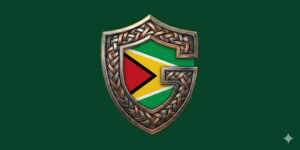

Did Guyana Lease Its Sovereignty? Questions the Shield of the Americas Should Prompt in Georgetown
|
🎧--- Listen To This Article Here : 👇🏽
|
592GUARDIAN♦ACCOUNTABILITY♦INTEGRITY IN JOURNALISM♦GUYANA
Did Guyana Lease Its Sovereignty? Questions the Shield of the Americas Should Prompt in Georgetown
OPINION BY: Hem Kumar November 2026
Costa Rica’s detention of a UN rapporteur is a warning about alignment without limits, and Guyanese citizens should ask where our own limits are.
Costa Rica turned away UN Special Rapporteur Francesca Albanese at its airport. Officials cited an unattributed “international alert”over “links to terrorist acts.” She had come to receive an honorary doctorate from a public university. Her own explanation was political: she says immigration officers told her it was a political decision. Costa Rica is a founding member of the Shield of the Americas, as Guyana is. The question for Georgetown is simple: if a Shield partner can do this, what would we do in the same position?
What we signed
Guyana’s own record is clear. President Ali has called Guyana a founding member of the coalition Mr. Trump launched in March 2026. In September, Guyana joined a statement with fourteen other governments setting out three pillars: economic,security and multilateral coordination
Guyana also agreed to sanction the Haitian gang Viv Ansanm and 23 other groups designated as narco-terrorist. In October, President Ali signed an enhanced defence partnership with the US Secretary of War at the Pentagon. The Shield has since added critical-mineral supply chains, investment screening and “trusted supplier” rules for digital infrastructure.
Did we lease the right?
On the evidence I found, no. The text of the joint statement is hedged. It speaks of an “intention” to impose asset freezes, visa restrictions and criminal liability, and only “as applicable and in accordance with our respective international and domestic legal obligations.” That wording does not hand over decision-making. It also targets cartel and gang networks, not UN officials. So Costa Rica’s act cannot be pinned on the Shield text. The better reading is that Costa Rica chose to go further than the text requires. I have not seen any classified annexes or side agreements, and I can’t rule them out. That uncertainty is itself a reason to ask.
Questions for Georgetown
- Who decides? The Shield says “as applicable”. Which Guyanese institution decides what is applicable, and does Parliament have a say?
- Who defines “terrorist”? The sanctions commitment relies on a list of designated groups. Will Guyana adopt foreign designations automatically, or review each one under our own law?
- What is the visa rule? The statement contemplates “immigration and visa restrictions for members, associates, and supporters.” “Associates” and “supporters” are elastic terms. What safeguards stop them being applied to journalists, rapporteurs or academics?
- Where is the text of our defence partnership? President Ali presents the partnership as protecting our sovereignty and territorial integrity. That is a fair argument, given the Venezuelan claim on Essequibo. But citizens should be able to read what we are committing to in return.
- How far does the economic pillar reach? Investment screening and supplier rules could shape who builds our ports, networks and mines. Do they cut against our non-aligned instincts and our other trading partners?
The honest case on both sides
Guyana’s defenders have a strong point. A small state with a hostile neighbour and an oil-rich maritime zone needs a powerful friend. The government says US cooperation is helping to monitor and protect that zone. Choosing security partners is itself an act of sovereignty.
But sovereignty is also proven by saying no. Albanese asked, “Is Costa Rica a sovereign country?” The Costa Rican government has so far not named who issued the alert. The test for Guyana is whether we could refuse a US or allied request that conflicted with our law or our values, and say so openly.
Our government should publish the Shield commitments and the defence declaration. It should also state plainly that no foreign alert will bar a person from Guyana without review under Guyanese law. A partnership we are proud of should survive being read in public.
I kept every claim tied to what the sources show, and I labelled the “leasing” question as unproven. The two sharper claims that would need more evidence. One is that Costa Rica acted at US direction. The other is that Guyana has made hidden commitments. Neither is established.

Discover more from 592guardian.com
Subscribe to get the latest posts sent to your email.




Leave a Reply
Want to join the discussion?Feel free to contribute!